Monday, January 3, 2011

Year 2010 - Memorable traveling moments

2010!! Phew!! What an year, as far as travel is concerned. 

When I started this blog, the caption for the title "Road to Destiny" was "tours and trips around Bangalore" . The year 2009 broke the barrier and I made my first north India trip for 10 days. I, then updated the caption as "tours and trips in India". Then the year 2010 came in and took me even farther, across the country; I visited France and Denmark. So now the caption is just "blog about my tours and trips". 

It all started with a wonderful wildlife experience when I did a Tiger census for three days in Rajiv Gandhi national park in Jan 2010 ; then a 10 days travel to Paris and Copenhagen(Denmark) in June; 11 days trip to North India in Aug; a couple of days trip to Goa in Sep; and few drives to the places like BR hills, K.Gudi, NagarahoLe,Yalagiri hills, Ranganathittu, Lepakshi and Nandi hills.

This post highlights, few of the memorable places that I visited, of course through photographs!


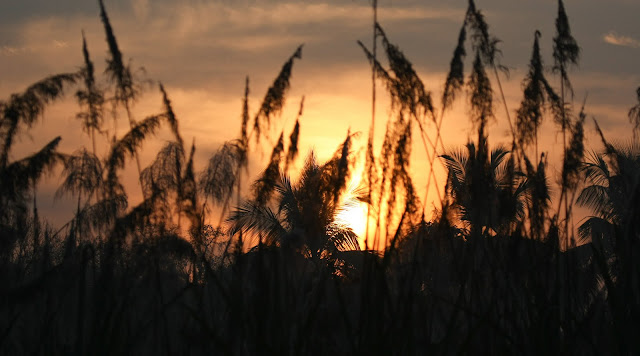
One of the sunsets in Nagarahole, while I went for Tiger Census, during Jan 2010 which setup my 2010 for an eventful journey
Paris and Copenhagen (Denmark)
It was a memorable moment indeed when I stepped out of the flight in Paris; I never thought that France would be the first country to be visited outside India! I then flew to Denmark for 6-7 days where my friends stayed. It all started with a gtalk chat when I was chatting with one of my friends who was onsite working in Denmark; The entire trip was planned in just a couple of days and I was all set to experience my first international trip (with my own money). I visited Paris for a couple of days. It was a beautiful summer season in Paris. The longer days gave me enough time to explore as many places as possible. It was also a day when French Open's final was played at Roland Garros stadium. We sat in an open air theater to watch Nadal win in  that finale. Apart from the hassles with vegetarian food I really enjoyed my stay at Paris.

Denmark on the other side, was raining, and it was a bit cooler compared to Paris. The life in Copenhagen seemed very slow but soothing. I rented a bicycle for a couple of days. Riding on the bicycle and exploring few places around was a good experience. These are few of my favorites photographs from that memorable trip.

1. With the breeze on the banks of the river Seine, it was an amazing view of The Eiffel Tower from a brigde
Versailles Palace, Paris
2. Versailles Palace, Paris
3. It was a great experience exploring the historical Louvre Museum, Paris
4. People pray at Notre Dam church, Paris
(4.a) Notre Dam Church, Interior view
5. Nyhavn, the 17th century waterfront - Copenhagen, Denmark
6. A bicycler heading to work in Copenhagen, Denmark
6.a Another bicycler heading back to home in the evening, Copenhagen Denmark
7. City Center of Copenhagen, Denmark; people hang out here in the evening and enjoy the shows from street performers

8. Copenhagen city has close to 40% of people using the bicycle as their transport; Almost every house has a bicycle
9. A church in Copenhagen, Denmark


North India trip - Aug 2010

We planned for Leh; there were floods ripping villages apart around Leh. We planned for Valley of Flowers; there were cloud bursts ripping the roads apart. We stopped planning but still headed towards Delhi thinking some plan might come up. 4-6 hours of discussion and planning sitting outside Indira Gandhi Airport, Delhi finally yielded some plan. Through this discussion we thought about all the options, like Rajasthan, Shimla, Sikkim, relief work in Leh(!!!!) etc etc. Finally the only thing worked out was a trip to Manali. After we reached Manali we planned for a trip along Tibetian border, from Manali to Shimla; covered Lahul and Spiti valley visiting lot of monasteries and enjoying the delicious Tibetian dishes. We went to places like Manali, Chandratal lake, Spiti Valley, Nako, Tabo, Kalpa, Shimla and Chandigarh. 


In spite of every obstacles and the threats of weather, we headed for this trip and it turned out to be the one to be remembered for a longer time! Kudos to the group!
10. A day spent at Manali with my gang; It rained heavily during the time we visited the place. God's grace, whenever we were out it didn't rain

11. Prathima, jumps with joy at Chandratal Lake near Manali; The lake looks amazing in the middle of few dried up and few snow covered mountains; the place was serene!
12. Landscape at Lahul and Spiti valley; there are some oldest villages in these areas.

13. This is me standing on a rock at Langcha peak; Lahul and Spit valley is really worth the travel!
14. A view from Langcha Peak in Lahul and Spiti valley
15. A Gonpa at Ki Monastery served us a hot tea which relieved all of us from whole day's stress
16. A monastery at a place called Tabo in Lahul and Spiti valley
(16.a) It was certainly the best evening we had in our north India trip; Tabo monastery is surrounded by tall hills and on a moon lit evening it really feels to be heaven. A must visit!
17. Few kids near Dhangkar, a 1000 year old Monastery; the tourist usually bring cookies or chocolates to the kids in village and the kids enjoy it
18. Buddha Statue at a monastery in Kalpa, North India
19. Reflections.. A lake in a village called Nako, one of the oldest villages. Explored during a trip to Spity and Lahul valley in a route from Manali to Shimla
 20. A night view from Ki Monastery in Spiti and Lahul valley; It was a moon lit evening and this shot was taken with 20 seconds exposure, with camera on a compound

21. Shimla, wasn't as cold as we would have thought, but it was a pleasant experience exploring Mall road
22. Traveling in toy train from Shimla to Kalka was great fun; we had one whole compartment for our group
23. A lake in Chandigarh; It was absolutely hot and humid in Chandigarh. All I did was sit under a tree and take a nap
24. I traveled to Goa to attend one of my best friends, Lawrence's engagement on Sep 18 2010 at Maupsa, Goa
25. Miramar beach, Goa during September 2010; beaches were empty with no tourists around
26. It rained a hell lot in Goa this season
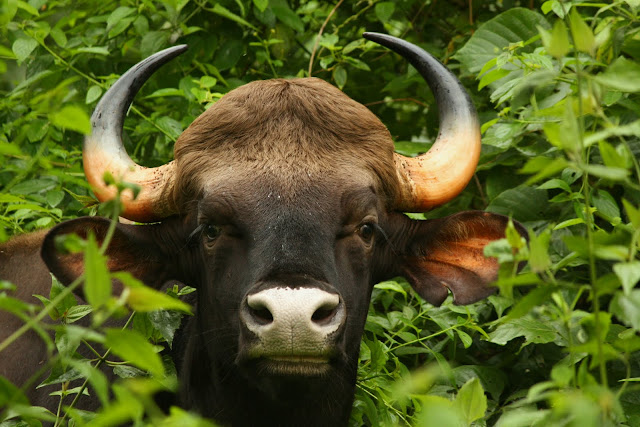
27.A Bison gives us a stare at Nagarahole forest, while we drove one early morning inside the forest;  There were quite a few drives to wildlife around Bengaluru
 29. Few trips around Bengaluru to explore architectures and temples This one is around Bhoganandiswara Temple, Nandi grama (close to Bengaluru)
   29. During Tiger Census, we heard the roar of a tiger in a huge field; we waited to get the glimpse of it; but it never turned up or seen even at a distance; meanwhile we did some model photography :-)
       30. One of those beautiful evenings; at Manchinabele Dam near Bengaluru; Bidding bye to 2010 and welcoming new year 2011. Hope it brings glory in every one's life. Wishing you all the best of life ahead! Happy new year!!


Saturday, December 25, 2010

Ranganathittu Bird Sanctuary - Collection

If anyone asks me how many times have I visited Ranganathittu bird sanctuary, I really won't be able to answer because it is innumerable. My visits to this place have always been for a purpose of bird watching and photography, of course! Situated at around 125 KM from Bengaluru and 3 KM from historical Sri Ranganapattan, Ranganathittu is a small bird sanctuary along the river of Kaveri (since 1940). The islets formed out of the Kaveri river (after the KRS dam was built) form an important nesting grounds for birds. The sanctuary attracts lot of migrants throughout the year. Though the best time to visit the place is said to be from March to May, I would say throughout the year you will be able to spot lot of birds (except some migrants which are seasonal). Early morning would be the best time to visit, because either you will find only nature lovers along with you or you will be the lonely visitor in the early morning. Otherwise, rest of the day you would find the place chaotic(most of the times), with people screaming and shouting or playing in the lawns.


Bird Life in Ranganathittu:
Common Kingfishers, Pied king fisher, White Ibis, Openbilled and Painted Storks, Wagtails, Magpie Robin, Red Whiskered bulbul, Pelican, Paradise Fly Catchers, Grey hornbills, Night heron and Pond herons, Little Cormorant, Indian Peacocks.. (the list goes on)

The photographs will keep on piling up on top of the archives, because my visits to this place are going to continue as long as I am around Bengaluru. I hope the readers/visitors of the blog like this collection and hope this adds to your love for nature and bird life. 

Most of these shots are taken with following equipments:


Canon EF 100-400mm f4.5-5.6L IS USM Telephoto Zoom Lens for Canon SLR Cameras  Canon Digital Rebel XSi 12.2 MP Digital SLR Camera with EF-S 18-55mm f/3.5-5.6 IS Lens (Black)   Canon EF-S 55-250mm f/4.0-5.6 IS Telephoto Zoom Lens for Canon Digital SLR Cameras

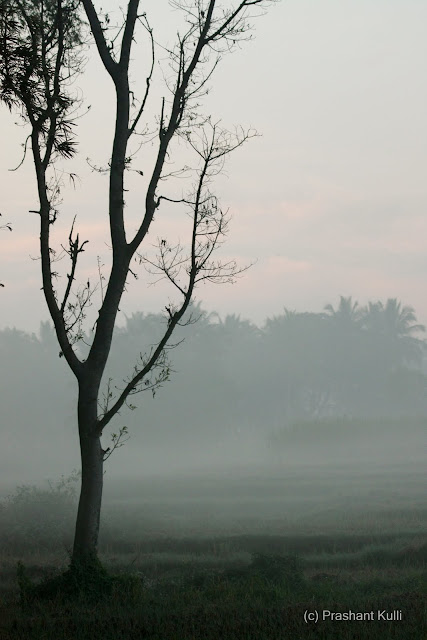
1. A beautiful winter Morning, covers the Ranganathittu Bird Sanctuary and the fields around with a thick fog; when the Sun rises above the horizon the fields get a golden bathing

2. The fields along side the river provide a good habitat for lot of birds which are seen throughout the year

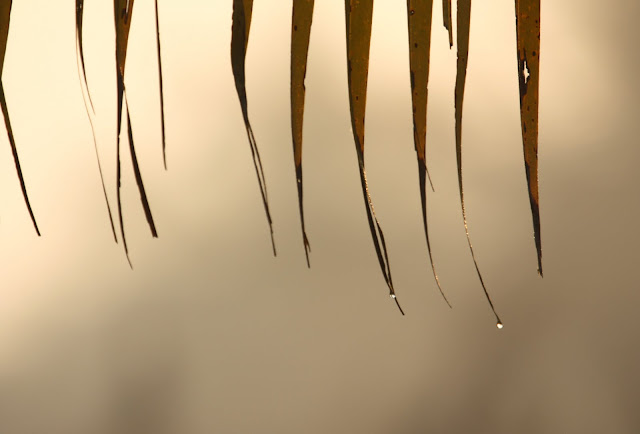
3. The early morning mist dripping down as a droplet 

4. Morning is the best time to visit the sanctuary as there will be less visitors giving you an opportunity to go around and take a lot of pics patiently. Also boating (250rs for a 8 seater) would help you go close to the habitats of migrant birds
5. Commonly found bird at the sanctuary; River Tern rests on a rock in an islet of the Kaveri river, on an early morning


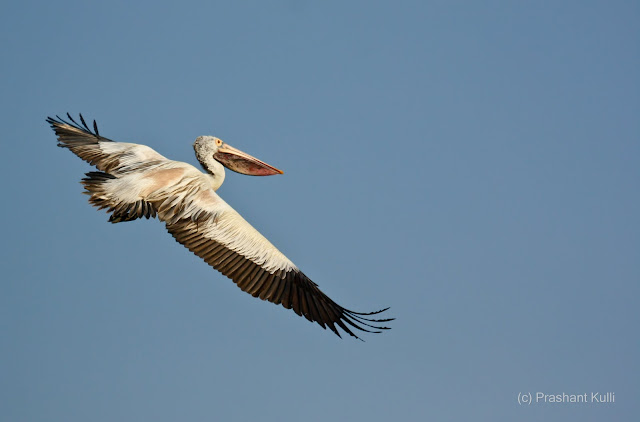
6. Pelican in flight; these Pelicans are huge in size and when they fly you can actually hear the sound of their wings pulling the wind back
7. Little Cormorant: It is always such a delight to see this bird's flight, and it flies tangential to the water looking for fishes

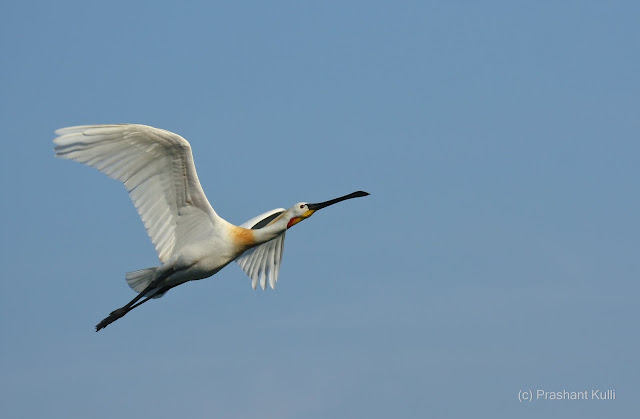
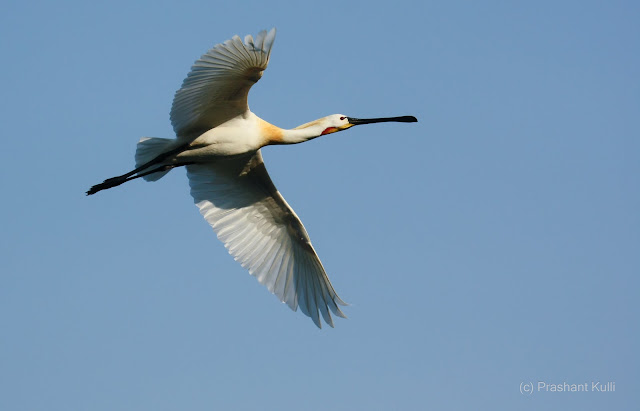
8. Eurasian Spoonbill in flight

9. Eurasian Openbilled Storks sitting on a tree, seen cuddling each other


10. Eurasian Spoonbill in flight

11. Common Kingfisher on a dried up branch


12. Night Heron waits for it's prey while making sure it is getting shade

13. Magpie Robin, not a very shy bird; gives enough opportunities for a photographer

14. King of the sanctuary: Pied Kingfisher waits for a fish hunt on a broken tree branch

15. Birds: Great Thick Knee

16. River Tern, turning its head before scratching it's back ;-)
17. Painted Stork in flight

18. Indian Grey Hornbill; Hornibills are very beautiful birds to watch; a  number of species of hornbills are threatened with extinction
19. A small birdie (may be a Sun bird or yellow wagtail?), in a cultivated field; I somehow feel very happy seeing this picture though there is nothing great in it. I love the bird in its solitude and there is a whitish grass over the bird's head as if it is an umbrella.

20. How can I forget this picture which won me a consolation prize at Canon Go Green competition Bangalore; A tiny droplet shows the green landscape along side the bird sanctuary


Wednesday, November 24, 2010

Tiger Census - Jan 25th to Jan 27th 2010 - NagarahoLe


The Tiger (Panthera Tigris) is one of the most endangered species in the world today as everyone knows. And it is one of the things that are making news nowadays when it comes to wildlife. Destruction of the habitats and poaching for fur of the Tigers has left approximately 2000 Tigers in the world as per the recent survey as opposed to an estimation of over 100,000 of tigers at the start of 20th century. India is home to the world’s largest population of tigers in the wild. Project Tiger started way back in 1973 led by Indira Gandhi, was a major initiative towards conservation efforts. The program received accolades when the Bengal Tigers population was tripled from 1200 in 1973 to over 3500 in the 1990s. However a tiger census carried out in 2007 (report published on Feb 12, 2008) startled the nature lovers which stated the Tiger population in India has declined by 60% approximately 1411, the number which you have been hearing from famous Sportsmen and Actors on TV channels everyday now. Also, the number might be lesser than 1411 by now.


1. On the verge of extinction; This shot was taken at Pilikula park, Mangalore; 
The Forest Department under the supervision of the Wildlife Institute of India (WII), the Central Government and Office of the Field Director of Project Tiger will carry out the Tiger Census in 2009/2010, in various states in India. Hopefully the results are announced soon about the population of Tigers as of now. With this background I will share my experience of Tiger Census conducted between Jan 22 and Jan 27th of 2010. I received a call from Hunsur Forest Division, to be a volunteer to help the officials to conduct Tiger Census for the second session starting from 25th Jan till 27th Jan 2010. Instantly I accepted the offer and planned my vacation.


*Note about the census conducted:
There is no guaranteed intervals or frequency at which Tiger (or any census) is conducted in the forests; The census usually will be done in all the forests throughout India; you will get such information through news paper or some online forums; you need to fill up an application form from Forest Office Division, fill it up and send it to the respective division to show your interest in volunteering. The govt officials will call you up and inform about your selection.


With so much of excitement, a little bit of fear whilst determination to sight a Tiger and capture that moment in my camera, I reached the check post of Veerana Hosa Halli range which is the starting point of Rajiv Gandhi National Park. After signing the bond paper few of the volunteers including me were taken to an Anti-Poaching camp inside the forest where we were supposed to spend our next 3 days and nights. I have always seen the jungle either through a safari which covers only a narrow part of the jungle or driving through the tar roads carved inside the national forests. This time, it was different. I was taken deep inside the jungle where anti-poaching camps are situated and where life can take any turn any moment. The excitement on the faces of all the volunteers was so evident! Few said "sigh, I can be away from all the tensions for 3 days" and few others cribbed "God, how am I going to spend 3 days!!"


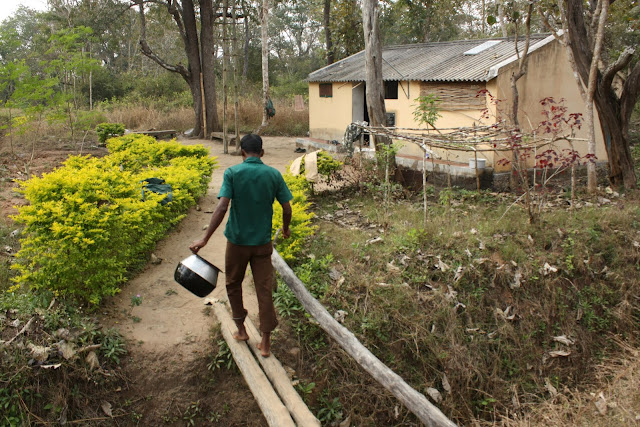
As the jeep took the deviation from the main road and entered the jungle the excitement doubled and the eyes were searching for the wildlife as though all the animals will be waiting to welcome us (high hopes!!). We drove inside for a few KMs till we reached an anti-poaching camp. All I can say about the camp is that, it was a 4 walled construction which had an entrance but no door, and there was a trench surrounding the camp which could have been crossed only by elephants. A guard and two watchers are the residents of the camp. These people are responsible to guard certain amount of forest area that they are assigned with.


The entire forest in this region is divided into several ranges and each range is divided into Compartments (CPT). In each CPT, there was a straight line of 2 kms cut into the forest (basically a narrow path was created) where were supposed to walk in a group which included 2 volunteers, a guide, and a Guard. Census on 2 kms stretch was conducted on first and 3rd day which involved census on habitat, prey density, herbivore and carnivore count and the vulnerable areas. The second day involved a longer coverage of about 5 to 7 KM specifically for Tiger Census. The census happened from 6 AM in the morning for about 4 to 5 hours every day. The camera trapping method was used 2 weeks before the census. This method entailed transmitting infrared beam at the ground level and the instruments kept perpendicular to the tracks commonly used by Tigers. The invisible IR beam would break and in turn trigger the camouflaged cameras which would take close up pictures of the animal.


The 3 days spent in the forest came as the gifted days when I needed a break the most. Away from the traffic jams and monotonous work; away from the pollution; fresh air all 3 days; birds chirping round the clock, Nilgiris Langurs making noise and jumping from branch to branch; jungle Mynas always flying as a couple; lot of parakeets flying high over the trees; those jeep tracks and our search for pug marks; distant lake and a shelter on the tree branch on which we waited for hours to get the glimpse of an animal; a sighting of a Leopard at a distance of just 50 meters and in all the excitement forgetting to release the shutter at the right moment; Finding a herd of 15-20 elephants right in front of the eyes and running back in fear to climb a tree to escape; climbing the tamarind tree and spending hours together just to kill the time; asking the watcher to prepare tea several times a day; camp fire in the evenings; etc etc; So many things; small things but always pleasure enjoying these moments.


After 5 hours of search on the 3rd day too, I could not sight a Tiger other than hearing its roar and seeing its pugmarks which was such a disappointment for me when all other volunteers who stayed with me had spotted at least one Tiger.  I pray and hope that the Tigers’ population is maintained and probably increased in coming years. I just hope next time around when I do census, I sight several of these striped beauties and get a chance to capture them in my camera. I had a terrific 3 days in NagarahoLe national park which will be remembered for a longer time. I am waiting for another such journey because the zeal to participate in such events will never die in me!


Update 28th March 2011:
Just heard the news that tiger population is increased by 15%; what a good news!!


PHOTOS
1. Bisons crossing the road early in the morning; there will be more movement of wildlife early in the morning, and hence every day we used to start by 6 AM.

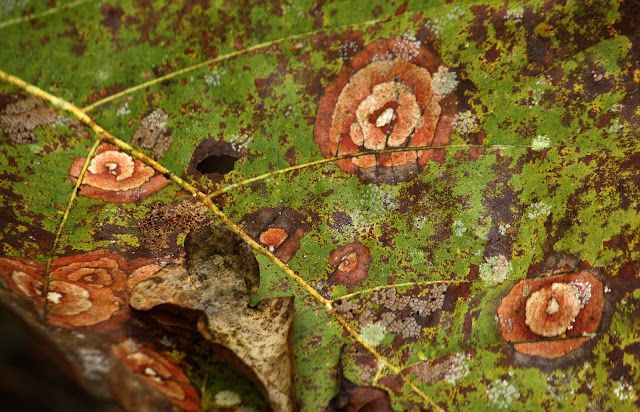
2. The Census included collecting data about vegetation in around 15 meters radius at every 400 meters for a stretch of 2 KM. The data includes the types of vegetation and density of each of the types in the given area.

3. While observing vegetation, the density of different types of leaves fallen off, and the affected leaves was also noted.


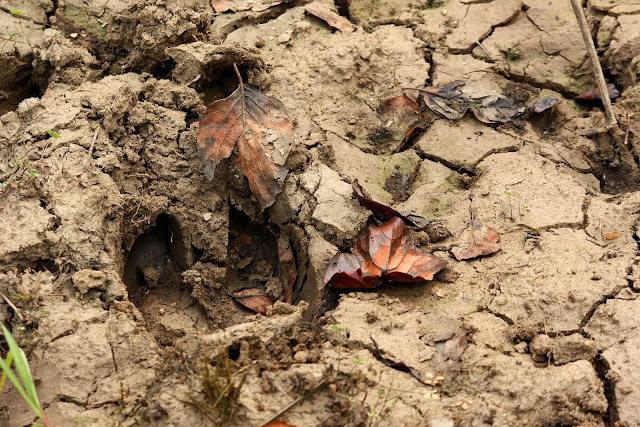
4. Dried up land and the left over pugmarks of a Bison; Very old pugmarks are not counted during herbivores census

5. Prey density is an important data to understand the Tiger population in an area. The lesser prey density alerts the officials of Tigers’ starvation and hence the deaths.
.
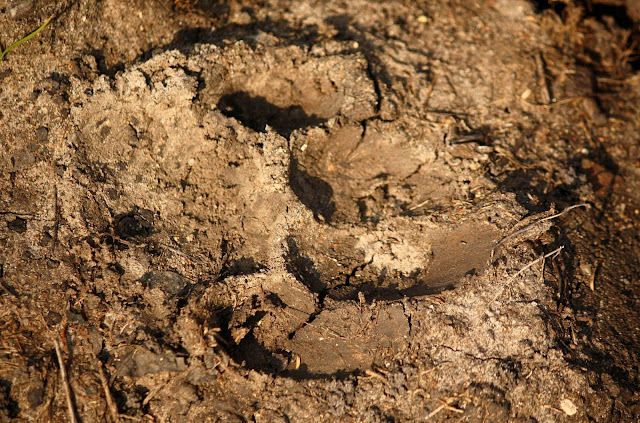
6. Pugmark of a Tiger on a jeep track inside the jungle printed just after our jeep has crossed this road a while before that. I missed to sight a Tiger by few minutes, in two incidents; once when there was a fresh dropping of the Tiger in the CPT where we conducted census; second one here on the jeep track.

7. When we were getting back from the census and walking towards the camp, we saw Pugmarks of a Leopard. After walking few steps on the same track we were stunned to see a Leopard marking its way down in the same direction. By the time I realized I had a camera and released the shutter, the Leopard fled the place and disappeared; disappointment for my camera but a sense of satisfaction to me that I sighted a Leopard on day 1.

The Anti-Poaching camp in Veerana Hosa halli range; They seem to guard the forest 24x7 without door, and with minimal facilities available.

8. The 2nd day too didn’t yield a Tiger sighting but full of pugmarks and rakes on the trees. I heard the roar too but couldn’t follow it.

9. Very old pug marks, as old as 3 months near the dried up lakes or water holes.

10. We found a herd or elephants right in front; they were all heading to this lake and hence we ran back, climbed a tree and waited for the elephants

11. Census included recording the data about how many trees are cut, how much of a tree is cut and natural damages around. This would provide an idea if there is a poaching in the region. The dried up leaves and fallen off trees are more vulnerable to take up fire. Last year around the same time, half of Veerana Hosa Halli forest was abolished because of the forest fire it seems; another reason for destruction of habitats of Tigers.

12. Umesh, our Guard, a brave officer who shot a poacher at his leg when a gang of 6 people were caught stealing the precious wood from the forest. Incident took place while the Census was on, two days before I reached. It is a message to the people complaining that our officials are not doing anything to save wildlife that there are few like Umesh who care for wildlife.
13. Elephants in the jungle are more threatening to the guards and watchers than Carnivores. There have been many instances where the elephants have charged down and chased these folks for several KMs.

14. A painting of a tiger from Chitrakala Parishat; I hope that the Tigers don’t remain just in photographs or paintings such as this one.

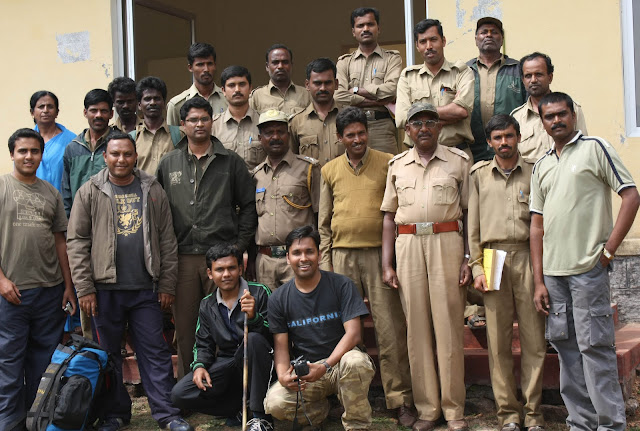
15. Will always remember this troop for giving such a wonderful experience of the jungle!